VOLHEIM
ARCHITECTURE + DESIGN
Bargesia: Island Community
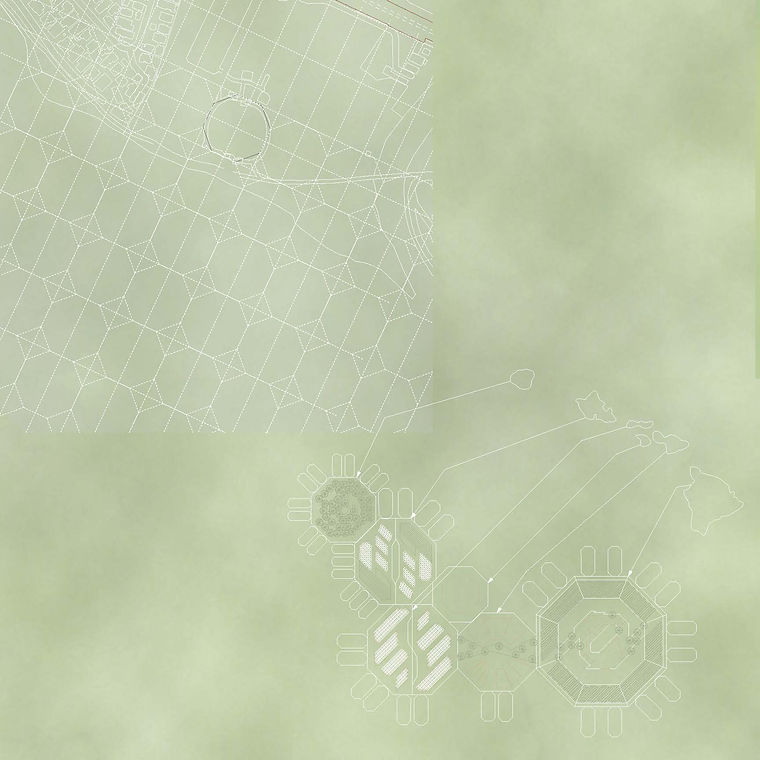
Bargesia: Island Community responds to the threat of rising sea levels by proposing a floating, self-sustaining community system for coastal regions facing the loss of inhabitable land. Instead of concentrating density into one large megastructure, the project organizes life on the water through a distributed network of modular precast concrete barges. This approach allows the community to remain flexible, scalable, and adaptable to changing environmental conditions while still maintaining a strong sense of collective identity.
Each community is formed around six connected “island” barges that create a shared civic core. These barges hold the essential programs needed for daily life, including business and retail spaces, community and education facilities, recreation areas, markets, food production landscapes, fish farming, and solar infrastructure. Surrounding this core, independent floating housing barges support 40–50 residential units per community, allowing the housing to remain lighter, more flexible, and separate from the heavier shared infrastructure. As shown, the proposal includes three connected communities, creating approximately 140 residential units.
Sustainability is central to the project’s organization. Food gardens, orchards, greenhouse spaces, and a dedicated fish farm help support local food production, while solar panels distributed across both the civic and residential barges provide renewable energy for the entire community. The fish farm is designed to produce more protein than the community requires, allowing the surplus to be traded for grains and other staple goods that cannot be produced on site.
The modular barge system allows each community to shift, expand, or reorganize over time based on environmental needs, population growth, or changing program demands. Housing units are constructed from four primary precast concrete wall systems, creating opportunities for efficient mass production while still allowing variation and customization. Together, these strategies propose a resilient model for future coastal living—one where architecture, infrastructure, food systems, and community life can adapt together on the water.